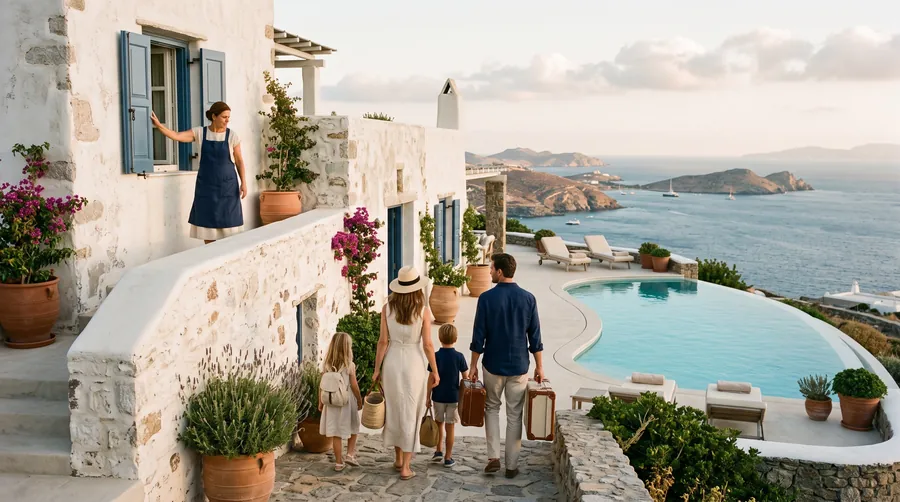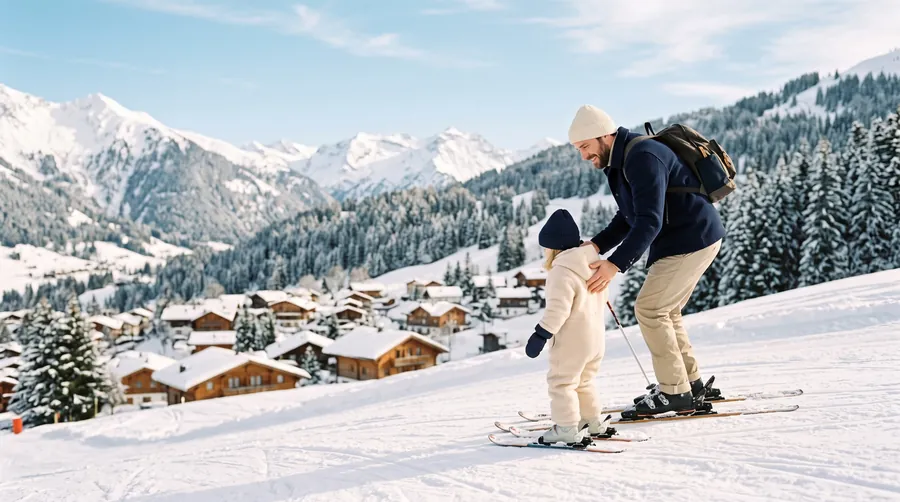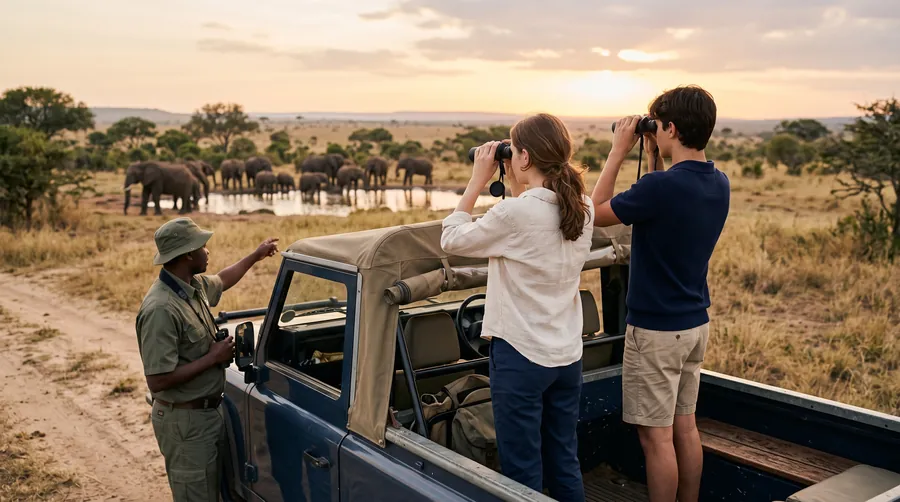

The affluent family holiday has a problem around the age of thirteen: the child who loved the villa and the ski school now wants nobody, nothing and a phone signal. The safari is the answer that works, because it is genuinely dangerous, genuinely beautiful and genuinely without Wi-Fi, and because a teenager standing in an open vehicle twenty metres from an elephant is, for once, silent.
The age
Most lodges take children from six, the good ones from eight, private houses at any age. But the safari that lands is the one from twelve, when the child can wake at five without a scene, sit still in a vehicle for three hours, understand what the guide is saying about tracks and dung and take the rules seriously. Walking safaris and canoe trips start at twelve or sixteen depending on the camp. Take the youngest child's age from the Family Trip Matcher and it will tell you which of the three countries fits.
The three countries
Kenya is the classic: the Masai Mara for the migration in August and September, Laikipia's private conservancies for a house of your own with a guide and a vehicle, riding with giraffes, and the coast at Lamu or Watamu for a beach week after. Flights from Europe are nine hours, direct to Nairobi. Malaria precautions are needed.
South Africa is the practical choice: no jet lag from Europe, malaria-free reserves in the Eastern Cape and at Madikwe for families with younger children, Cape Town and the winelands as a city week, and prices a third below East Africa. The Big Five are all there. The wilderness is a little less wild.
Botswana is the purest: the Okavango Delta by mokoro canoe, private camps with six tents, the great predators and a silence that impresses even a sixteen-year-old. Expensive, remote, teenagers only, and the trip of a lifetime for the family that has done the other two.
Private house or camp
A private house on a conservancy, with its own guide, vehicle, chef and staff, costs from 4,000 to 15,000 euros a night for the whole family and removes every rule about children: the six-year-old comes on the drive, the dinner is when you want it, the guide adapts to the youngest. A camp is more sociable, cheaper per person, and the guides are shared. For a family of teenagers, the private house is worth it; for a family with a mix of ages, it is essential.
The rules
Teenagers who obey nothing at home obey the safari guide, because the guide is not a parent and the consequence is a lion. Nobody leaves the vehicle without permission, nobody walks to the tent at night without an escort, nobody feeds anything, nobody stands up in the vehicle near elephants. Agree the rules at home, let the guide repeat them, and enjoy watching your child become obedient.
The day
Up at five, tea, a drive from six to ten, breakfast in the bush, rest, lunch, sleep, a drive from four to seven with sundowners, dinner by the fire, bed by nine. Five days of this is the ideal; seven is the maximum before the drives repeat. Combine with the coast, the Cape or Victoria Falls.
The kit
Neutral colours, a fleece for the mornings, binoculars for each child (the eight-times-thirty kind, not the toy), a camera with a proper zoom for one of them, a headtorch, sun cream, insect repellent, the malaria medication the doctor prescribed, and a notebook. No drones, no white clothes, no phone at the sundowner. The photograph of the leopard is the guide's job; the child's job is to look.