
The eighteenth is the last birthday the parents host and the first the child attends as an adult. It carries more weight in families of means because it often coincides with legal events: access to a trust, a first meeting with the family office, a signature on something. The families who do it well separate the three parts, the party, the gift and the conversation, and give each its own evening.
The party
The party belongs to the eighteen-year-old and the parents pay for it, host it and disappear from it. The rules that keep it civilised: a guest list agreed together and closed a month ahead, invitations that say when it ends, food that is served rather than left, one bar with a limit and a professional behind it, transport home arranged and paid for, and security at the gate from sixty guests upwards. A marquee in the garden, a supper club at a restaurant, a dinner for forty with speeches and dancing: the Birthday Party Planner has the concepts and the budget split. Budgets range from 5,000 to 50,000 euros and the memorable parties are rarely the expensive ones; they are the ones where the parent's speech was funny and short.
The gift
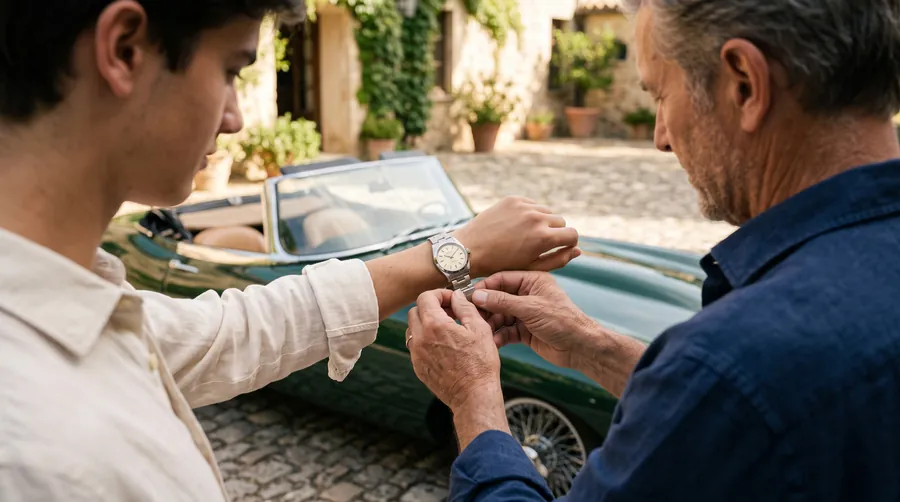
The eighteenth gift says adult. A good mechanical watch, ideally one with a story; a signet ring with the family crest, which is why the Crest Maker exists; a fountain pen that will sign contracts; the first piece of art, chosen together; a trip taken alone, a train across Europe or a month in Japan; a membership of a club that will still matter at fifty. What the eighteenth gift should not be is the thing the child has been asking for since sixteen; that was a sixteenth gift. And it should not be a car with a badge; see the first car.
The conversation
If the eighteenth brings legal changes, a trust that vests, shares that transfer, a signature on a family document, the conversation happens in daylight, with a lawyer or the family office, a week or a month after the party, not on the birthday. The child needs to understand what they now own and what is expected; the family constitution, if there is one, is read together. Families who spring the number on the child at the birthday dinner report the same thing: shock, then either paralysis or a spending spree. Families who have talked about money since ten report a conversation.
The letter
Every parent should write one, by hand, several pages, and give it on the morning of the birthday to be read alone. What you saw in the child at three, at nine, at fourteen. What you admire. What you got wrong. What you hope. Not advice, not conditions, not the family's expectations. Adults in their forties who received such a letter still have it; nobody remembers the watch.
Grandparents and godparents
The grandparents' gift is traditionally the big one: jewellery, a portfolio, a share in the house. The godparents' is the personal one: a lunch, a trip, an introduction to someone worth meeting. Coordinate the two so that the child is not given three watches, and let the family assistant keep the list.
The party ends at one. The adult life starts the next morning, with the thank-you letters. Thirty of them, by hand, within a fortnight. It is the first test of the new adult and the family will know by the end of the month whether it went well.