
Paediatricians in the private practices of London, Zurich and Manhattan report the same thing: the children of their wealthiest patients are chronically short of sleep. Not from deprivation but from abundance, of activities, travel, screens and ambition. A twelve-year-old with piano on Monday, tennis on Tuesday, tutoring on Wednesday, riding on Thursday and a flight to the chalet on Friday is not a lucky child. She is a tired one.
How much
Toddlers need eleven to fourteen hours including naps, primary-school children ten to eleven, teenagers eight to ten. Most affluent teenagers get seven. The difference shows as irritability, poor concentration, more injuries in sport, more colds, worse grades and, in adolescence, a measurably higher risk of anxiety and depression. Sleep is not the soft part of health; it is the part everything else sits on.
The three thieves
The timetable. Two structured activities a week for a child under ten, three for a teenager, and one full day with nothing planned. Everything else is a parent's ambition wearing a child's kit.
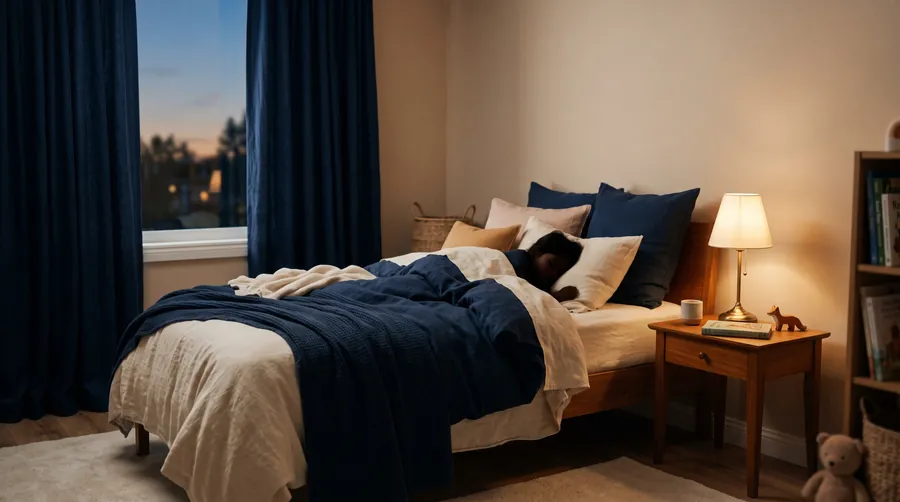
The bedroom. No screen of any kind in the bedroom until sixteen, and after that none after ten o'clock. The phone charges in the kitchen. Blackout curtains, a cool room, a warm bath, a book. The best boarding schools enforce all of this and their pupils sleep better than day pupils, which is a strong argument for boarding that nobody makes.
The schedule of the adults. Dinner at nine because the parents got home at eight, a flight at six because the meeting is at ten, a weekend in a time zone three hours away. Children's sleep is organised around adult convenience in most wealthy households and around the child in the households that do it well.
Travel and time zones
A child who crosses more than three time zones needs a day per zone to adjust, and a family that flies to the Maldives for a week has spent the week adjusting. The rule of thumb: short-haul for holidays under ten days, long-haul for two weeks and more, and the flight timed for the child's night. Melatonin is prescribed for children in some countries and sold in sweets in others; ask the paediatrician, not the pharmacist.
The teenager
Adolescent body clocks shift late: a sixteen-year-old is biologically inclined to fall asleep at midnight and wake at nine, and school starts at eight. Nothing fixes this except later school starts, which a handful of schools have adopted with striking results. What helps: no phone after ten, no caffeine after two, sport in the afternoon not the evening, weekend lie-ins limited to two hours so Monday is survivable. What does not help: lectures.
The test
A child who wakes without an alarm on school days is sleeping enough. A child who has to be dragged, who falls asleep in the car and who is a different person on Sunday evening is not. The Family Health Planner has the hours by age; the rest is a family decision that costs nothing and is harder than any purchase.