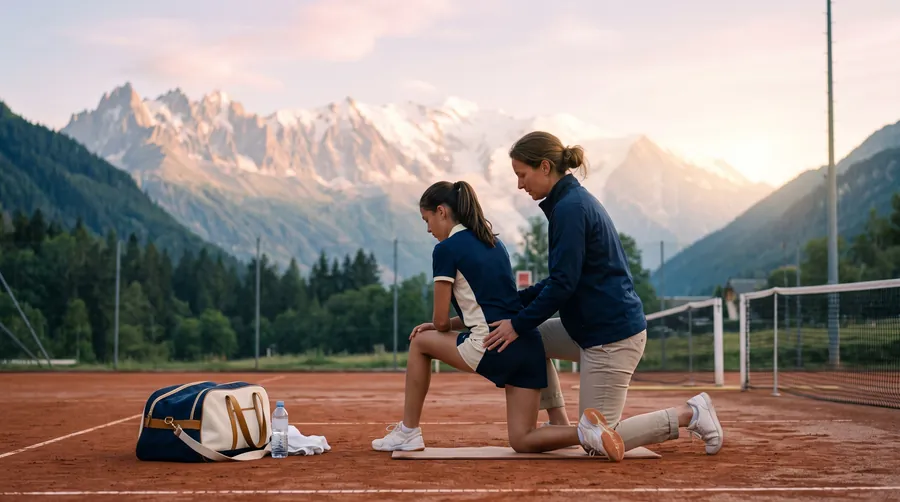
Private coaching, academies in Florida, ski weeks with former racers, a pony and a tennis court at home: the sporting opportunities of a wealthy childhood are wonderful and they carry a specific medical risk. Children who specialise early and train hard get hurt in ways adult athletes do not, because they are growing, and the injuries of a growing body are different.
The growth plate
Children's bones grow from plates of cartilage near the ends, and until the plates close, at fourteen to sixteen in girls and sixteen to eighteen in boys, they are the weakest part of the skeleton. Repetitive load on a growth plate produces the classic conditions of the ambitious child: Osgood-Schlatter at the knee in footballers and tennis players, Sever's disease at the heel in runners and gymnasts, little league elbow in throwers, stress fractures in the spine of gymnasts, riders and rowers. None is dangerous if treated with rest. All become chronic if the child plays through them because the tournament is next week.
The ten-hour rule
The paediatric sports medicine consensus is simple: a child should not train more hours a week than their age, should not train in one sport for more than eight months a year, and should take one full day off a week and one month off a year from organised sport. A ten-year-old: ten hours. A fourteen-year-old: fourteen. Most academies exceed this and most parents let them, because the coach says the child is talented. The coach is not the doctor.
The sports physician
From the moment a child trains more than eight hours a week or competes at regional level, they need a sports physician who works with adolescents: not the family doctor, not the club physio, and not the orthopaedist who treats the parents' skiing knees. The good ones do a yearly assessment of growth, flexibility, strength imbalances, nutrition and sleep, they know the difference between soreness and injury, and they will tell the coach no. Private practices in London, Zurich, Munich and Barcelona have such specialists; the concierge paediatrician will know them.
The mind
Young athletes in private programmes carry a second load: the family's investment. A child who knows the tennis academy costs 60,000 euros a year plays with a weight on the racket. The signs of trouble are the same as in any adolescent, sleep, appetite, mood, a sudden wish to stop, and the response is the same: a conversation, a psychologist who knows sport, and permission to quit. A child who wants to stop at fourteen and is allowed to usually plays for pleasure at forty. A child who is not allowed to often stops at eighteen and never touches the sport again.
The equipment
Helmets that fit, boots that fit this season, a saddle checked yearly, a racket of the right weight and a bicycle of the right size. Wealthy children are frequently under-equipped in the only way that matters, because the equipment was bought to grow into. The child grows into it after the injury.
The plan
A yearly sports medical, a written hours rule the coach has signed, a day off a week, a sport that is not the main sport, and a family that can say the season does not matter. Our Family Health Planner puts the sports medical on the calendar; the rest is a conversation with the coach that most parents avoid and every child needs.