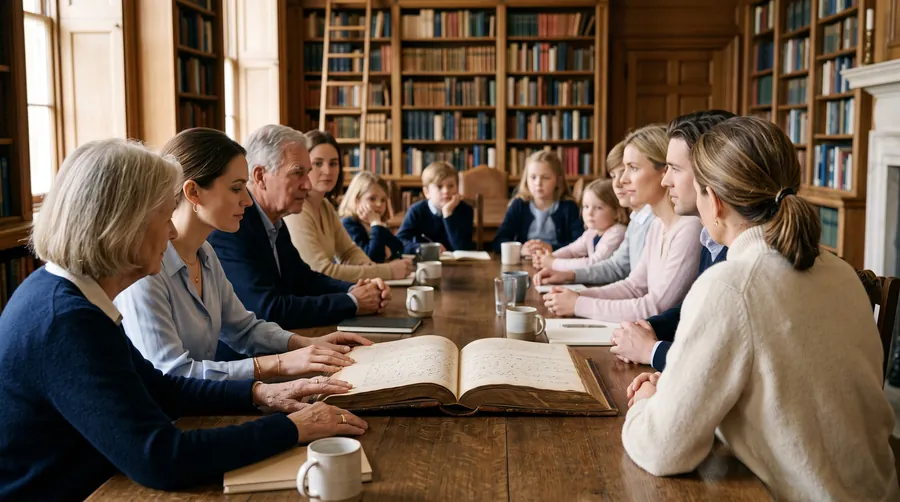
The saying exists in every language: clogs to clogs in three generations, shirtsleeves to shirtsleeves, Dalle stelle alle stalle. The first generation makes it, the second holds it, the third spends it. The research on family businesses and family fortunes broadly confirms the saying, and it finds one factor that separates the families who last from the families who do not: they talk, on purpose, in a structure, and they write it down. The document is the family constitution, also called a family charter, and it has become standard practice among families who intend to be families in a hundred years.
What it is
A written statement, agreed by the adult members of the family, covering who the family is, what it values, how it makes decisions, how the business or the wealth is governed, how members join and leave, and what is expected of the next generation. It is not a legal document; the trusts, the shareholder agreements and the wills do the legal work. It is a moral document, and it is the one the family actually reads.
What goes in
- Values and purpose. Why the family holds wealth together rather than dividing it. What it stands for. The three or four sentences that a child could repeat.
- Family council. Who sits on it, how often it meets, how it decides, who chairs, from what age children attend and from what age they vote.
- The business or the assets. How the family relates to the company, the family office or the portfolio: who may work there, on what terms, how they are hired and paid, how ownership passes, what happens on a divorce or a death.
- Money for members. Distributions, allowances, loans, education funding, house purchases, what is a right and what is a request.
- The next generation. Education expectations, work outside the family first, the age of access, the role of spouses, the preparation for ownership.
- Philanthropy. The foundation, the budget, who decides, how the children take part.
- Conflict. How disagreements are handled: mediation, a family elder, an outside adviser, before the lawyers.
- Amendment. How the document changes, because it will.
How it is made
Not by the patriarch alone and not by the lawyers. The constitutions that work are drafted over a year in a series of family meetings, often with an outside facilitator who has done it before, with every adult member contributing and the teenagers in the room for part of it. The first draft is short. The fights happen during the drafting, which is the point: better a shouting match about spouses on the board in a facilitated meeting than in a probate court.
The children's part
The next generation is the reason for the document and should be in it from the start. Children from fourteen attend one meeting a year and are asked what they think. At eighteen they sign. At twenty-one, in many families, they vote. The constitution is where the conversations about wealth become a set of expectations the child helped write, which is why the children who grew up with one rarely feel the wealth was done to them.
What it costs
A facilitator and an adviser for a year: 30,000 to 150,000 euros for a large family with a business, a great deal less for a family with a portfolio and a house. Against the cost of the alternative, a family that stops speaking, a business sold in a dispute, a fortune halved by litigation, it is the cheapest document the family will ever commission.
The test
Can a sixteen-year-old in the family explain, in two minutes, what the family owns, how decisions are made and what is expected of them? If yes, there is a constitution, written or not. If no, the family is trusting to luck, and the saying about three generations is a description of luck.