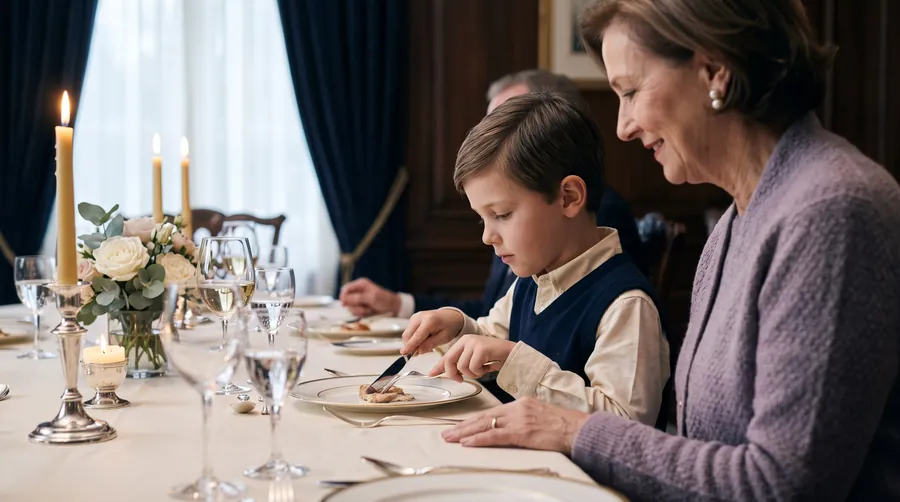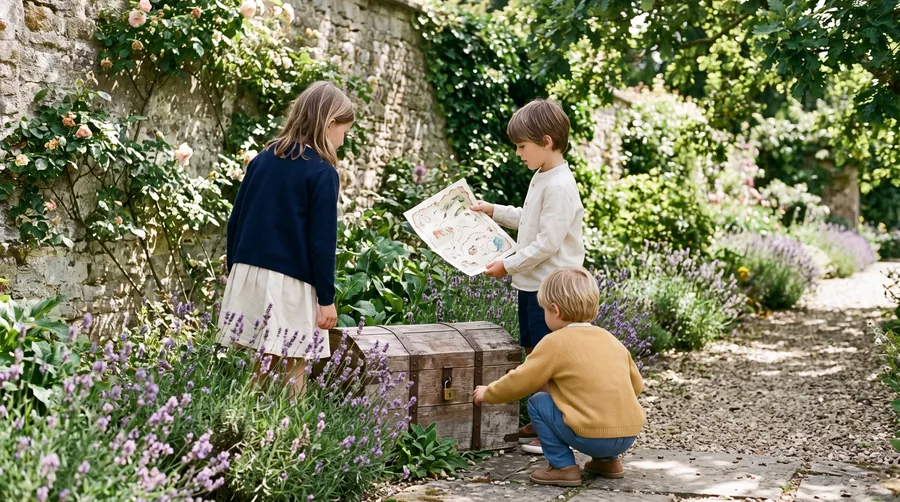
Children of families who entertain are invited to weddings, christenings, balls, regattas, race meetings and dinners from an early age, and every invitation carries a code. The codes were written for adults, and the translation for children is not obvious. The rule underneath all of them is the same: a child dressed for the occasion is a child who has been thought about, and the hosts notice.
White tie
The rarest and the most formal: state occasions, a handful of balls, some weddings in old families. Children under twelve are rarely invited. Boys from twelve wear a dark suit with a white shirt and a black bow tie, or a page's outfit if the family tradition dictates; a tailcoat is for eighteen and over. Girls wear a long formal dress and no jewellery beyond a small necklace.
Black tie
Dinners, dances, charity galas, the Christmas ball at the club. Boys from about eight wear a dark suit, a white shirt and a bow tie; from fourteen a dinner jacket, which can be hired until sixteen and bought after. Girls wear a formal dress below the knee, or long from fourteen, with flat or low shoes. Children under eight, if invited at all, wear their smartest dark outfit.
Lounge suit, or "smart"
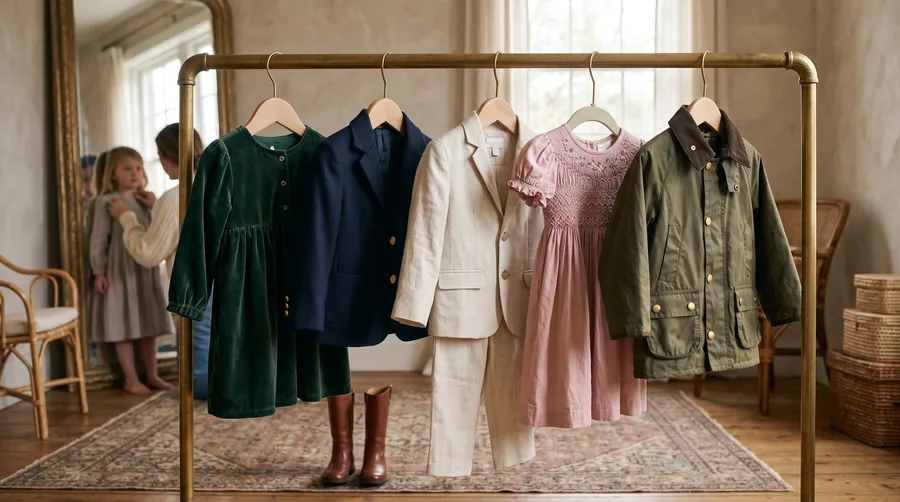
Weddings, christenings, confirmations, lunches, race meetings in the enclosure. Boys wear a suit, or a blazer with grey trousers and a tie for under ten, with proper leather shoes; the navy blazer is the most useful garment a boy will own between six and sixteen. Girls wear a dress or a skirt and a smart top, with a jacket for church, and shoes they can walk in. A hat for girls at weddings and at the races, if the mother is wearing one.
Smart casual
The code that causes the most trouble because it means different things in different families. For children it means: no jeans, no trainers, no logos, no shorts after six in the evening. Boys in chinos and a collared shirt with a jumper or a jacket; girls in a dress, a skirt or trousers with a good top. Loafers, not sneakers. When in doubt, dress one step up; nobody was ever thrown out of a lunch for wearing a jacket.
Country, boat, beach
Country weekends: wax jackets, wellingtons that fit this year, a tweed jacket for shooting days, cords, jumpers, and one smart outfit for dinner. Sailing: proper deck shoes, a waterproof that is actually waterproof, a hat with a string, and no white trousers on a boat with a child. Beach clubs and yacht clubs: a cover-up over the swimming costume from the age of six, and shoes.
School events
Speech day, sports day, the carol service: the school will say, and the parents' dress matters as much as the child's. Speech day is a lounge suit and a summer dress; sports day is smart casual with flat shoes; the carol service is a coat and gloves. The parent who overdresses for sports day is remembered longer than the parent who underdresses for speech day.
The wardrobe
A year of invitations is covered by: a navy blazer and grey trousers or a navy dress and a cardigan; one dark suit or one formal dress; a wax jacket and boots; a smart coat; two pairs of proper shoes, polished by the child from the age of ten; a white shirt and two ties, or two dresses that can be worn to church; and a bow tie from eight, taught, not clipped. Everything else is fashion, and children grow out of fashion in a season.
The rule underneath
Clean, pressed, fitting, polished, and appropriate to the host. A child in a blazer with scuffed shoes and a shirt hanging out has failed the code however expensive the blazer. A child in last year's suit, pressed, with polished shoes and a tie done properly, has passed. The Gift Finder lists the blazer, the coat and the shoes as gifts for the ages they are needed.