
Ask any grandparent, godparent or host what they remember about the children of their friends, and a surprising number will mention a letter. Not the gift the child gave, not the child's exam results, but a card, in a child's handwriting, that arrived a week after a birthday or a weekend. The thank-you note is the cheapest, most reliable and most neglected instrument of a good upbringing, and families who insist on it produce children who are asked back.
The rule
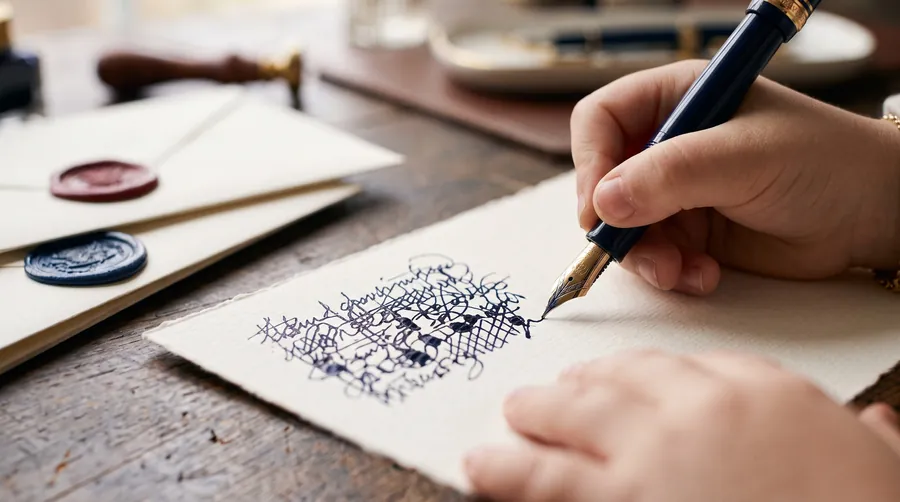
A written note within a week for every gift received, every stay in someone's house, every dinner or party the child was invited to, and every favour an adult did: the work experience, the introduction, the lift to the airport. In the child's own hand from six. Three sentences minimum. On a proper card, not a text message, not an e-mail, not a voice note. Posted, with a stamp, in an envelope the child addressed.
The three sentences
The first names the thing and says thank you: "Thank you so much for the telescope." The second says something specific about it, which is the sentence that proves the child thought: "We took it into the garden on Saturday and found Jupiter and three of its moons." The third looks forward: "I hope we can look at Saturn together when you come at Christmas." Sign off with love, or best wishes, or yours, and the name. A child of eight can write this in ten minutes; a child of fourteen should write more.
The kit
A box of good correspondence cards with the child's name printed at the top, a fountain pen or a decent rollerball, stamps and an address book kept by the family assistant or a parent. Children who have their own stationery write letters; children who have to find a card do not. The printed cards cost 60 to 150 euros for a hundred and are among the best presents a godparent can give a seven-year-old; the Gift Finder lists them.
The enforcement
The notes are written before the gifts are used, the day after the party, at the kitchen table, with a parent writing their own. That last part matters: a child who sees a parent write to a host writes to a host. The birthday presents stay in their wrapping until the card for each is in its envelope; it is the only sanction that works, and it works completely.
The exceptions
None. Not for the grandparents who say it does not matter, not for the friend's parents who are relaxed, not for the present the child did not like. The note for the unwanted present is the most educational of all: "Thank you for the jumper. It is a very warm blue. I am sure I will wear it when the weather turns." Diplomacy, at eight.
The result
At eighteen, thirty notes after the birthday, within a fortnight, without being asked. At twenty-two, a note to the interviewer. At thirty, a note to the client, the host, the person who made the introduction. The habit, once built, is the one piece of the childhood that shows in every room the adult enters, and it began with a telescope and Jupiter.